You’ve probably seen the warning on your passenger-side car mirror: “Objects in mirror are closer than they appear.” Which raises an obvious question: Why put a mirror on your car that deliberately distorts reality? Turns out there is a very good reason—and that distortion may actually help keep you safe. https://science.howstuffworks.com/innovation/science-questions/why-objects-in-mirror-closer-than-they-appear.htm
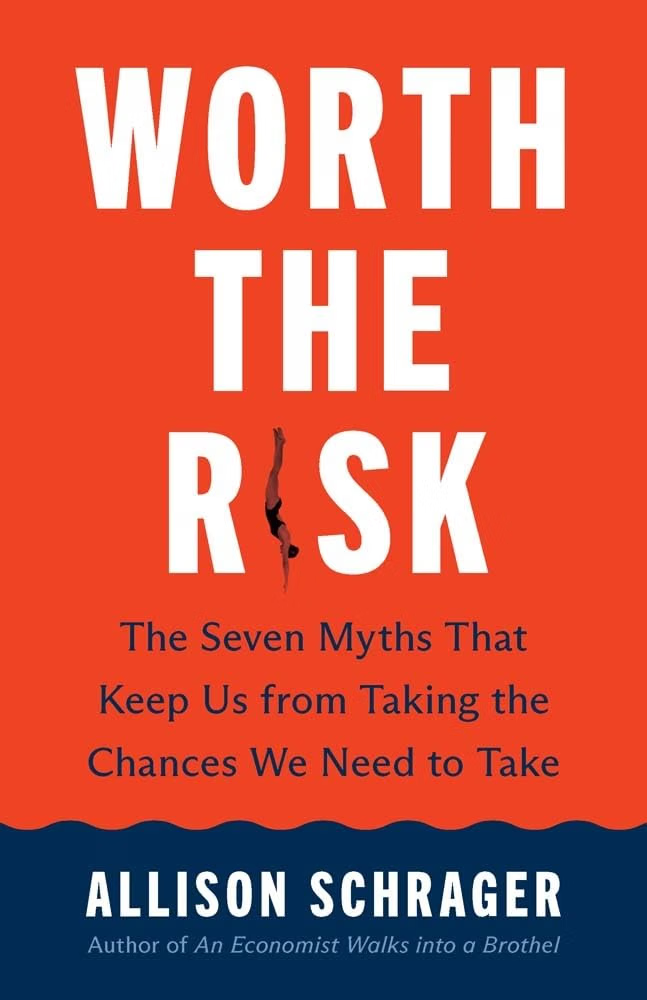
We hear all the time that the world has become a riskier place and that the smart thing to do is play it safe. But is that really true? And what do you give up when avoiding risk becomes your default? Economist Allison Schrager explains why younger people appear more risk-averse than previous generations, why safety has a price, and how to tell the difference between a foolish gamble and a risk actually worth taking. Allison is a senior fellow at the Manhattan Institute and a columnist at Bloomberg Opinion. She is author of Worth the Risk: The Seven Myths That Keep Us from Taking the Chances We Need to Take (https://link.amazon/B0cRfL4UU).
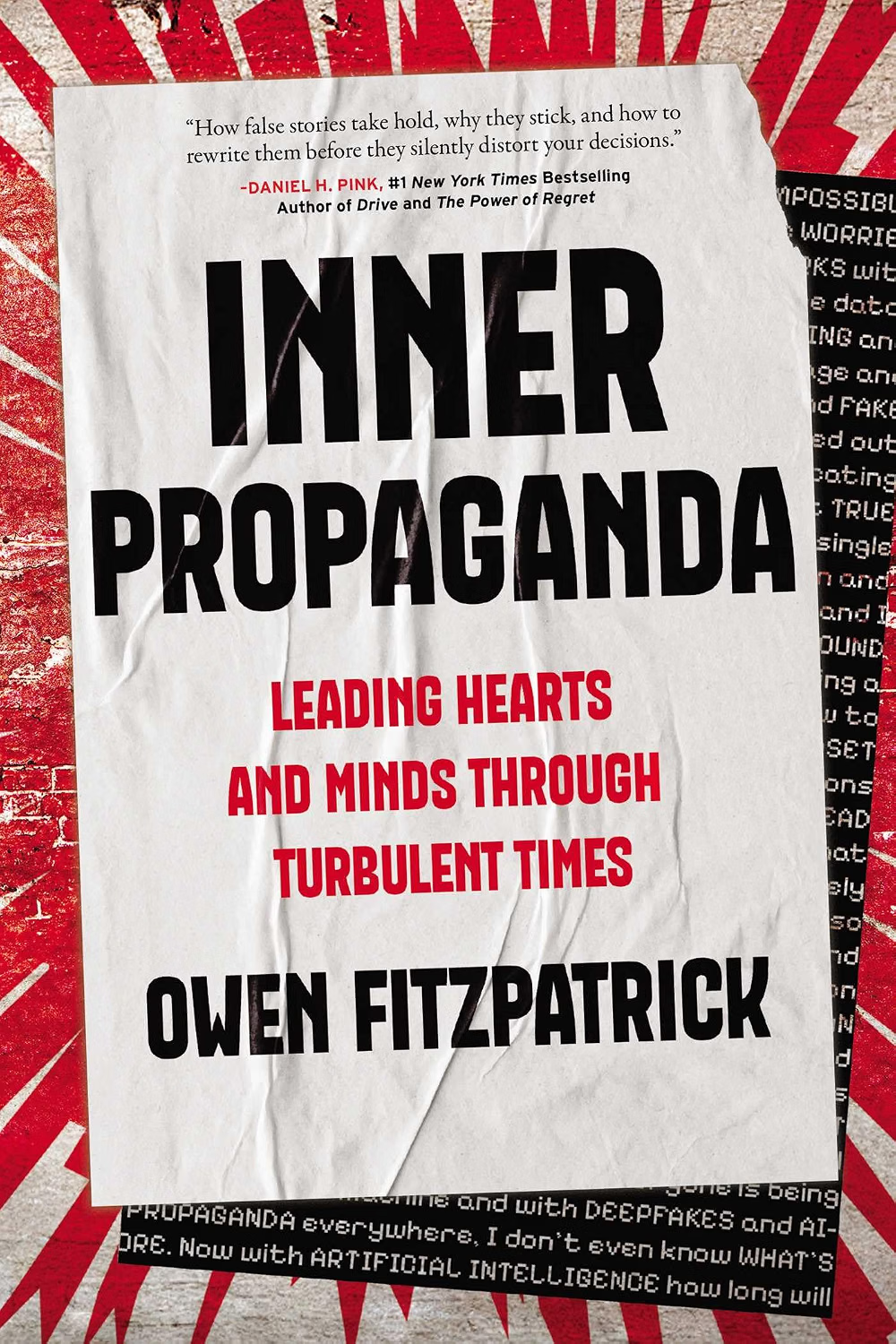
Right now, there are things you believe about yourself that feel like undeniable facts. Maybe you believe you’re bad at something, that certain people don’t like you, or that you simply aren’t the kind of person who can do certain things. But what if some of those “facts” aren’t facts at all? They may be what social psychologist Owen Fitzpatrick calls inner propaganda—stories your mind has repeated so often that you’ve come to accept them as truth. Owen explains why this inner propaganda can be so convincing and, most importantly, how to recognize it and challenge it. He has studied propaganda around the world, including in North Korea, and his TEDx talk on mind control has been viewed more than 1.4 million times. His latest book is Inner Propaganda: Leading Hearts and Minds Through Turbulent Times (https://link.amazon/B0aZRzMzg).
Cats are missing the ability to taste something humans often find irresistible. Oddly enough, cats can also taste something that we can’t. Neither is an accident. The explanation goes back to what cats evolved to eat—and offers a fascinating little glimpse into just how differently your cat experiences its dinner. https://www.scientificamerican.com/article/why-cats-taste-no-sweets/
PLEASE SUPPORT OUR SPONSORS
AIR DOCTOR: Head to https://AirDoctorPro.com and use promo code SYSK to get $250 off select AirDoctor air purifiers, including the 3500, 4000, and 5500 models. Plus, you’ll receive a free 3year warranty, an $84 value, and AirDoctor’s 30-day money back guarantee
WAYFAIR: Ready to upgrade your home for way less? Head to https://Wayfair.com right now to shop all things home and get your space ready for less.
QUINCE: Elevate your everyday. Go to https://Quince.com/sysk for free shipping on your order and 365-day returns. Now available in Canada, too!
SHOPIFY: It’s time to turn those “what ifs” into CHA CHING with Shopify Today! Sign up for your $1 per month trail and start selling today at https://Shopify.com/realm
INDEED: Get a $75 Sponsored Job credit to help get your job the premium status it deserves at https://Indeed.com/PODCAST
RESOURCES FOR THIS EPISODE:
Source for the story about rear-view car mirrors: https://science.howstuffworks.com/innovation/science-questions/why-objects-in-mirror-closer-than-they-appear.htm
Amazon link for Allison Schrager’s book, Worth the Risk: https://link.amazon/B07u5XVrv
Amazon link for Owen Fitzpatrick’s book, Inner Propaganda: https://link.amazon/B01n4dcRx
Source for the story about cats: https://www.scientificamerican.com/article/why-cats-taste-no-sweets/